
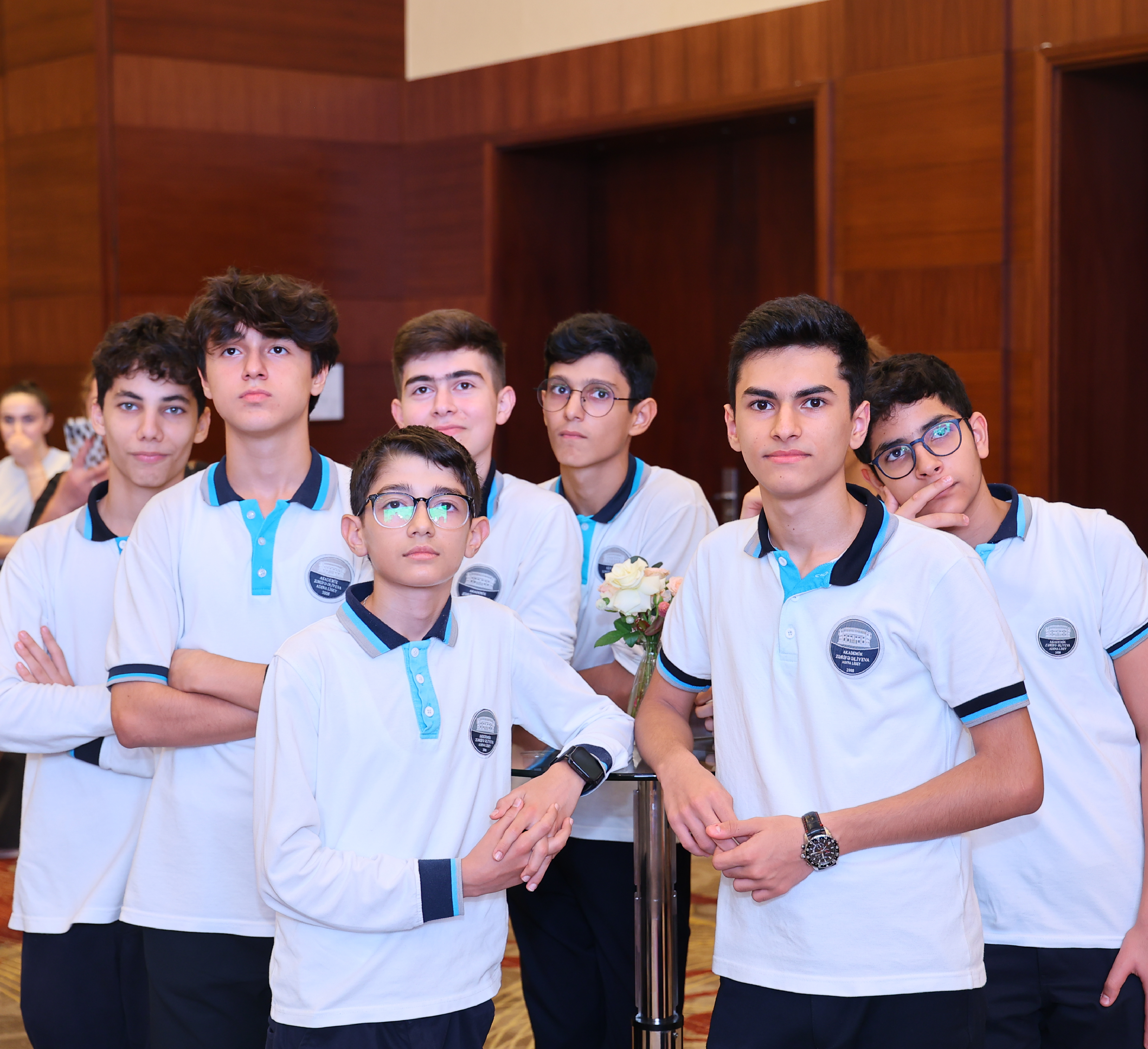
On October 9, within the framework of World Space Week 2025, the official opening ceremony of the next International Space Olympics took place. The event was organized by the SPACE Academy of Azercosmos, with the support of the State Agency for Preschool and General Education, the Institute of Education of the Republic of Azerbaijan, and in cooperation with the Israel Space Agency.
For more than 25 years, the International Space Olympics has contributed to the development of creativity and analytical skills in thousands of young people by increasing their interest in science, technology, and especially in the field of space. First held in the city of Tel Aviv in 2000, the Olympics has become a significant platform for scientific collaboration, technological creativity, and international friendship by bringing together school students from various countries around the world.
The International Space Olympics develops students' skills through three main pedagogical approaches:
1. Guided Discovery Learning (GDL)
2. Problem-Based Learning (PBL)
3. Computational Thinking (CT)
The Olympics consists of four main selection stages. The first and second stages are conducted in a hybrid format — both in-person and online. The third stage is held as a regional competition. Students who succeed in this stage advance to the fourth and final stage — the national final. The third and fourth stages also serve as interactive platforms where students come together and review the space science projects of other teams.
The theme of the Olympics for the 2025–2026 academic year is “Artemis – Humanity's Journey to Space” Inspired by NASA’s Artemis program, students will work on innovative solutions for planning, exploring, and constructing the space infrastructure of the future. They will apply creative approaches to key challenges associated with deep space travel and present models of the infrastructures and components they have developed.
It should be noted that the winner of the national stage of the Olympics for the 2024–2025 academic year — the student team from the academic lyceum named after Zarifa Aliyeva — achieved second place in the international stage among 500 schools and 11,000 participants.
Our team is always here to support you and answer any questions you might have.